
Although not suffering from our intense heat, the people of the Middle Ages in the British Isles and France still had to adjust their usual cooking styles. It has been called the “eon of hot soup”, as even the poorest peasants would have a fire over which they could keep a pot at least an earthenware pot into which they could put whatever they had to make a soup or stew. A French cookbook of the 14th century mentions a “green poray”, or porridge.
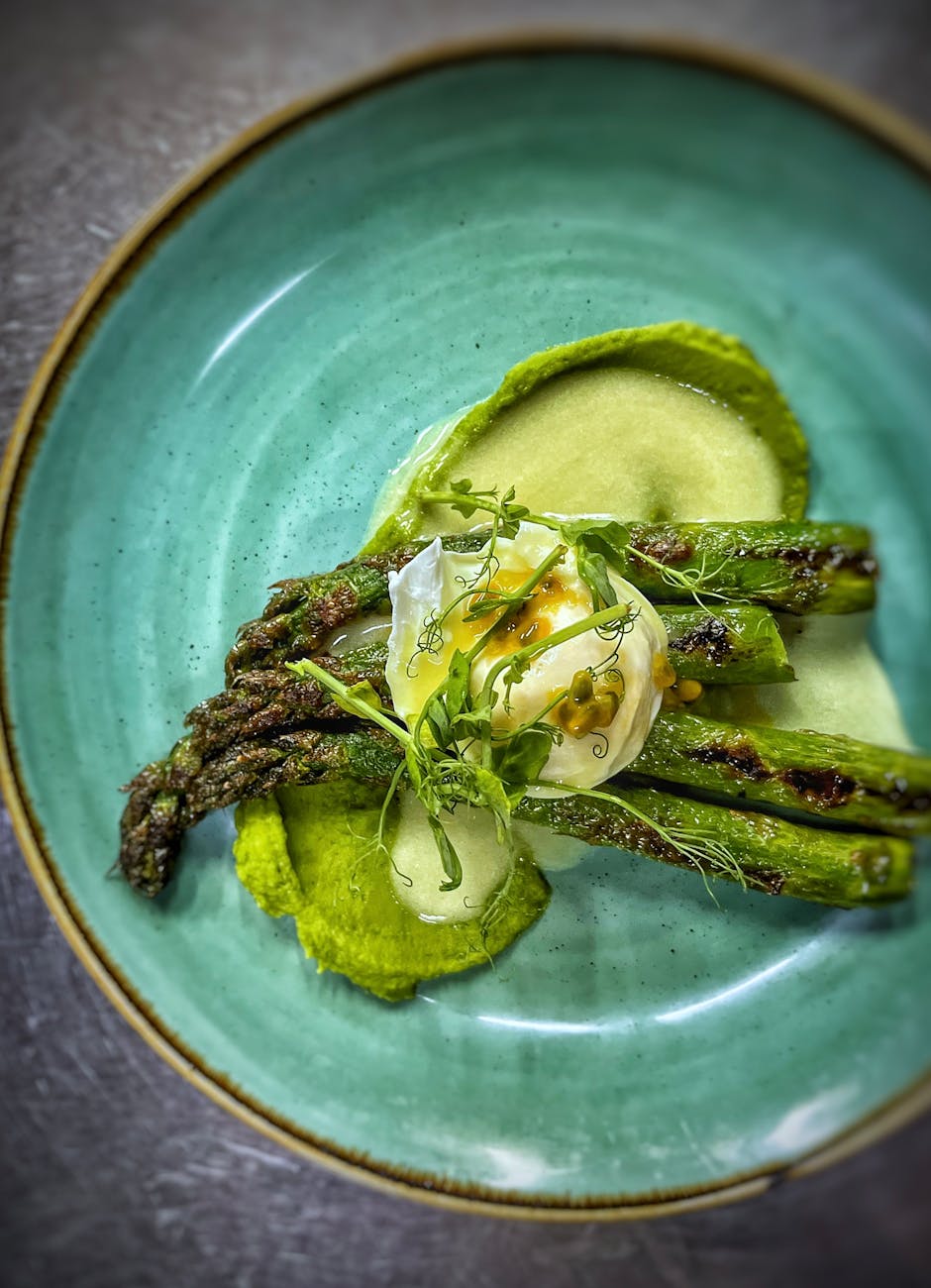
Vegetable recipes are harder to find. The English asparagus season ran from St. George’s Day on 23 April until 21 June – Midsummer’s Day. Today our asparagus tends to come from South America, but British asparagus is still grown and considered the best in the world. Whichever of the over 100 varieties of asparagus you can get, this Spanish recipe from 1599 is a change of pace from the usual asparagus preparations. Please note that Seville oranges are bitter, so if you are using sweet oranges you’ll need to add some lemon juice.
INGREDIENTS:
– 12 spears of asparagus
– juice of 6 Seville oranges
– 1 tbsp brown sugar
– 1 tbsp butter
– pinch of salt.
METHOD:
1.Snap off the woody base of the asparagus, and steam the spears for about 8 minutes or until tender.
2. Meanwhile,heat the orange juice in a saucepan.
3.Add the sugar and a pinch of salt and whisk in the butter.
4. Allow to thicken for a few minutes. Arrange the asparagus on a plate, pour over the orange sauce and serve immediately.
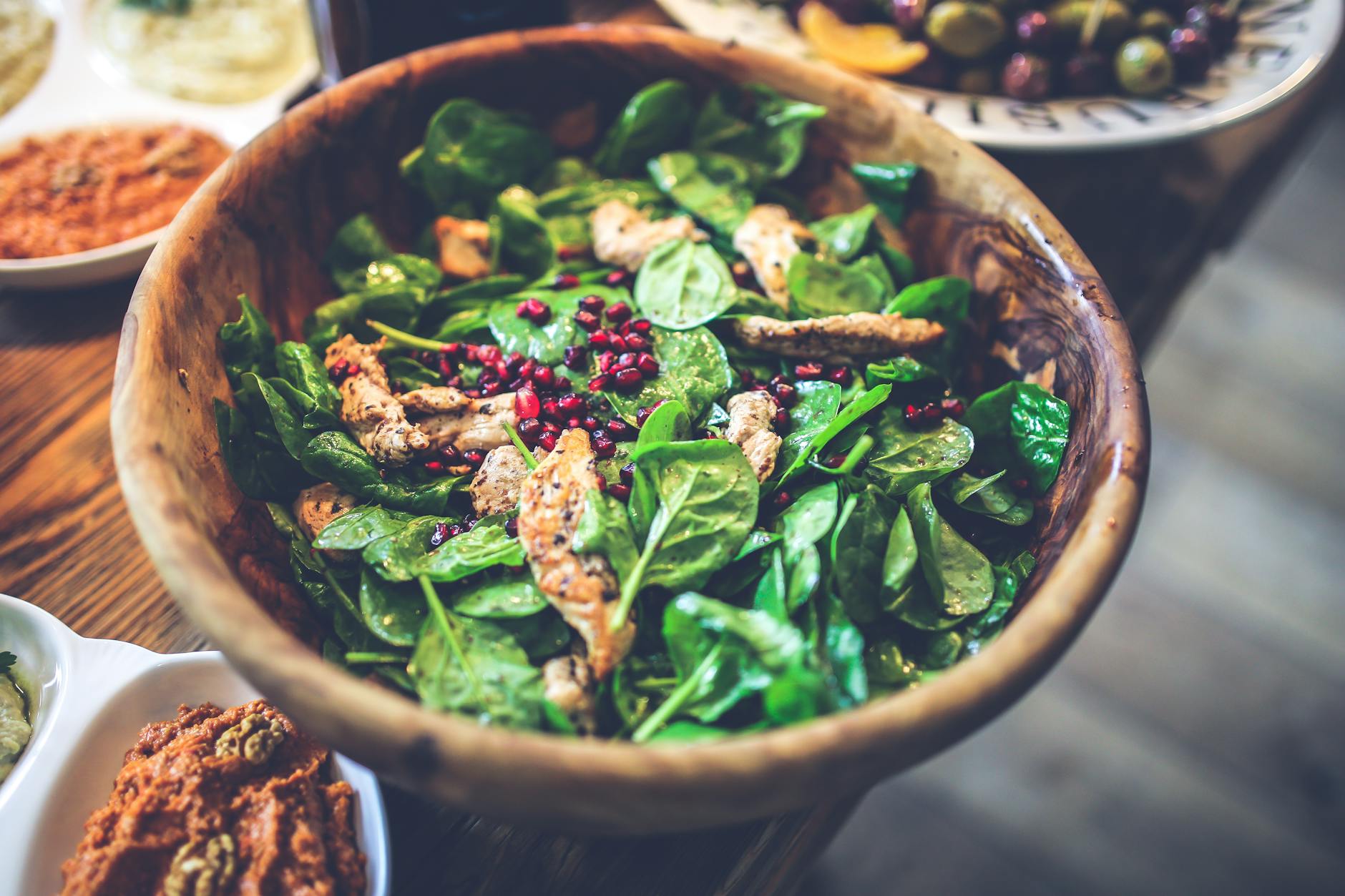
Despite ignoring many vegetables in their written recipes, Tudors did love a grand sallet, or salad. Their salads range from strictly using vegetables to adding all sorts of different meats.Honestly, you can clean out your fridge, arrange it prettily, and claim it as a historical Tudor sallet! Presentation was everything, as you can see with a recipe by Robert May, who published his cookery book “The Accomplisht Cook.” in 1660.
INGREDIENTS:
– cold roast capon (or any other roast meat, as chicken, mutton, veal or neat’s tongue)
– minced tarragon and an onion
– mince lettuce
– olives
– samphire
– Any of the following: broom-buds, pickled mushrooms, pickled oysters, lemon, orange, raisins, almonds, blue figs, Virginia potato, peas.
METHOD:
1. Take a cold roast capon, and cut it into thin slices square and small (or any other roast meat, as chicken, mutton, veal or neat’s tongue).
2. Mingle with it a little minced tarragon and an onion.
3. Then mince lettuce as small as the capon, mingle all together, and
lay in the middle of a clean scoured dish:
4. Then lay capers by themselves, olives by themselves, samphire by itself, broom-buds, pickled mushrooms, pickled oysters, lemon, orange, raisins, almonds, blue figs, Virginia potato, peas and the like, more or less as occasion serves.
5. Lay them by themselves in the dish, round the meat in partitions.
6. Then garnish the dish sides with quarters of oranges and lemons or in slices.
7. Oil and vinegar beaten together and poured over it.
OTHER INGREDIENTS SOMETIMES USED
– The buds of all good sallet herbs, washed and swung in a clean napkin.
– Dates, raisins, almonds, currants, figs.
– Flowers, pickled or candied, such as violets, cowslips, clove-gilly Rowers [old fashioned clove pinks] roses, primroses, borage, etc.
– Leaves of spinach and sorrel, also red beetroot, white endive and chervil, corn sallet, Alexander buds [resembling celery].
– Pickled mushrooms.
– Some white cabbage leaves minced, and boiled cauliflowers.
– Pickled grapes, gooseberries, barberries, red and white currants.
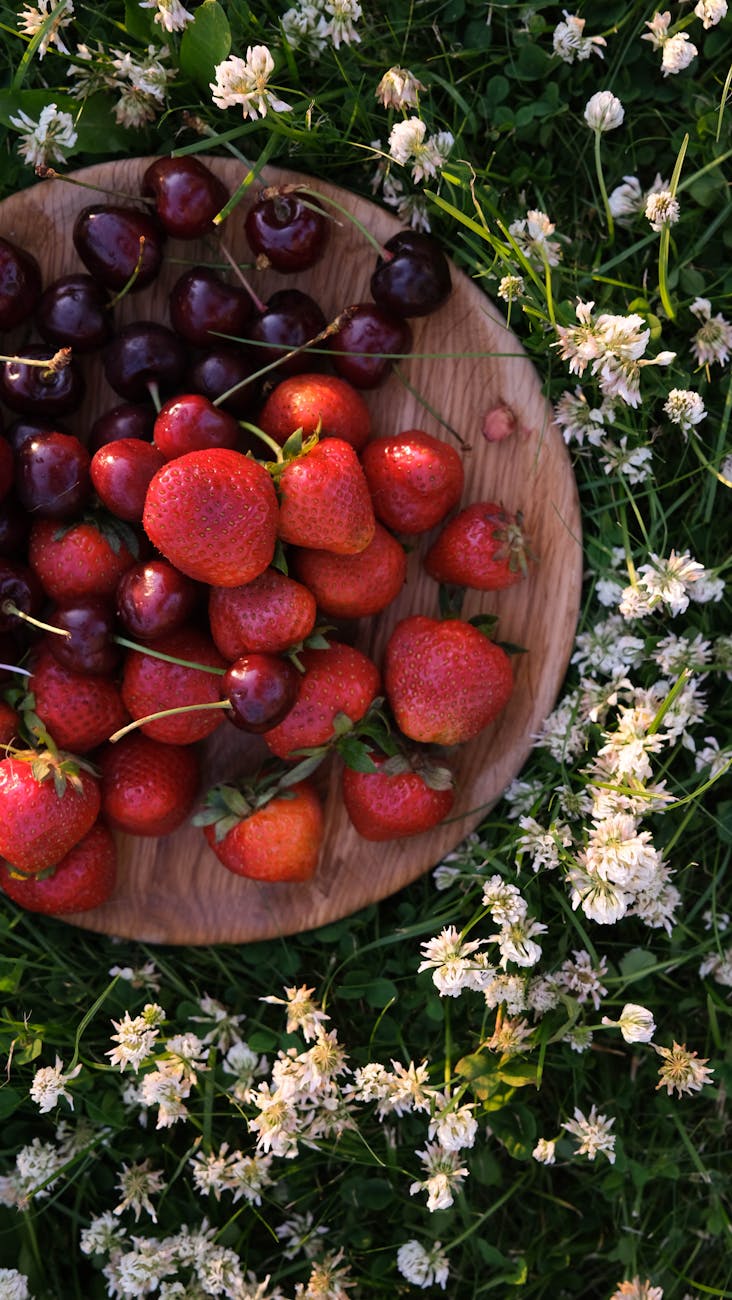
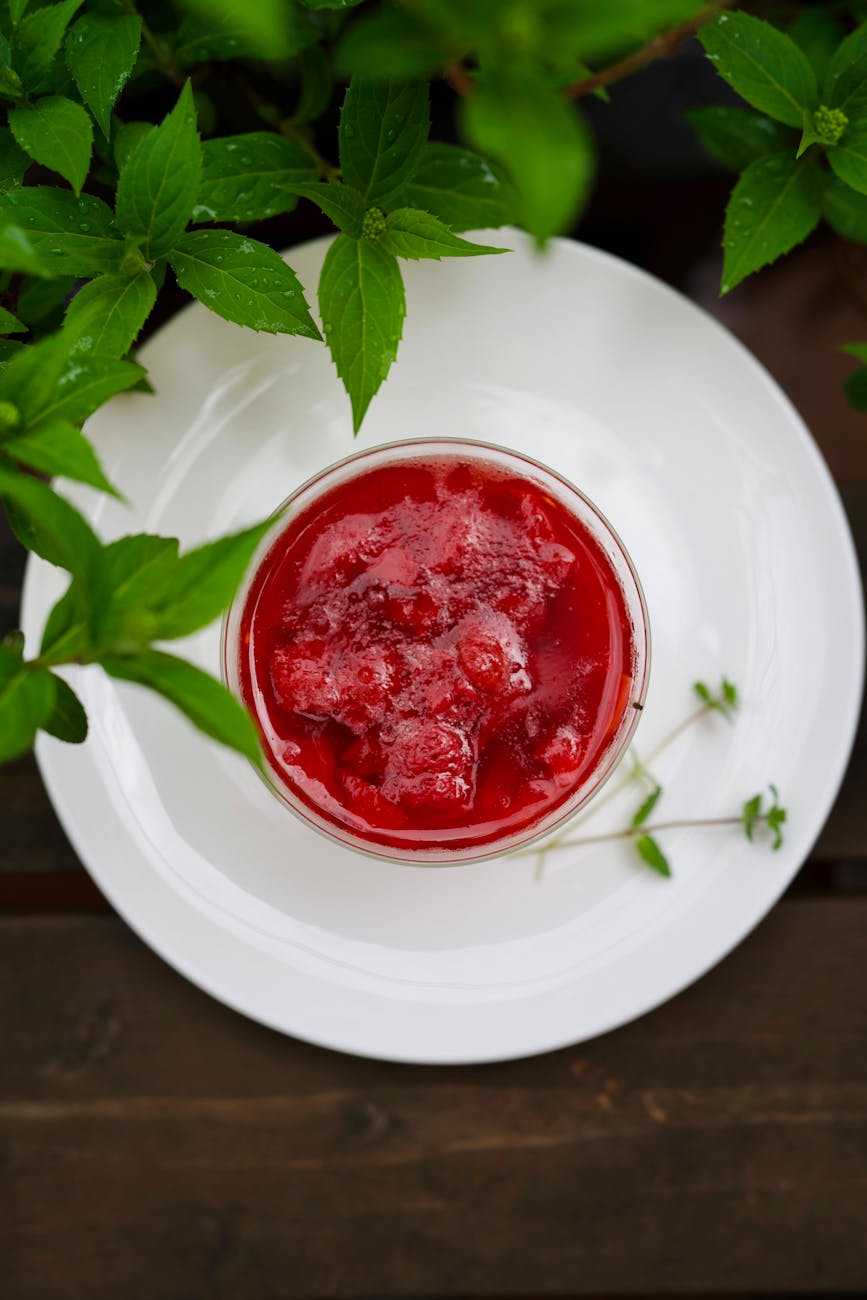
Fruit was in great abundance in July, and we have extant recipes for cooked plums and gooseberries,while it appears raspberries, cherries, and strawberries were most often consumed raw. The Tudor Travel Guide has a great example of a cooked strawberry dish, which can be found in original recipes from two fifteenth century cookbooks:
Strawberye
INGREDIENTS
– 1 cup of red wine
– 1 pound of fresh or frozen strawberries
– 1 cup of almond milk
– ½ cup currants
– 2 tablespoons rice flour
– ½ a cup of sugar
– Dash of (white) pepper – (long pepper may be used)
– 2 teaspoons ginger powder
– 1 teaspoon cinnamon
– ½ teaspoon galingale
– 4 tablespoons red wine vinegar
– 1 tablespoon butter or lard
– pinch of saffron
– pomegranate seeds
METHOD:
1. In a blender, combine strawberries, wine and almond milk. Blend until smooth.
2. Pour blended mixture into a saucepan and bring to a boil.
3. Add rice flour and stir until mixture thickens slightly.
4. Then add currants, red wine vinegar, butter and spices and stir over medium heat for about 5 minutes.
5. Spoon hot sauce into a saucer and garnish with pomegranate seeds. Makes approximately 4 cups, serving 8 to 10 people.
The sauce can be used to accompany grilled chicken or eaten as a refreshing dessert.
The short English cherry season begins in mid-July, and as they are my favorite fruit, here is a genteel version of porridge.
Serves 6
Ingredients
- 31.7 oz fresh ripe red cherries
- 12 fl oz red wine
- 6.2 oz (¾ cup) white sugar
- 1.8 oz (¼ cup) unsalted butter
- 1 cup soft white breadcrumbs
- Pinch of salt
- Flower heads of small clove pinks or gilded whole cloves (according to season.
- Coarse white sugar for sprinkling
METHOD
- Wash the cherries and discard the stems and stones.
- Purée the fruit in a blender with 5 oz. of the wine and half the sugar. Add a little more wine if you need to.
- Melt the butter in a saucepan and add the fruit purée, breadcrumbs, remaining wine, sugar and salt. Simmer, stirring steadily, until the purée is very thick.
- Pour into a serving bowl, cover and leave to cool. When quite cold, decorate the edge of the bowl with flowers or whole cloves, and sprinkle coarse sugar over the centre.
As you can see, there is a lot more to Renaissance cooking than just turkey legs, and summer is a great time to experiment with the different tastes of historical cooking.

Christine Boyett Barr is an award-winning journalist and English instructor, teaching high school and college English. In addition to her pedagogical pursuits, she hosts movie events for the Alamo Drafthouse Cinema and portrays Catherine of Aragon at the Texas Renaissance Festival. She is the mother of four and is owned by two cats.
 ladyfairemagazine.com