
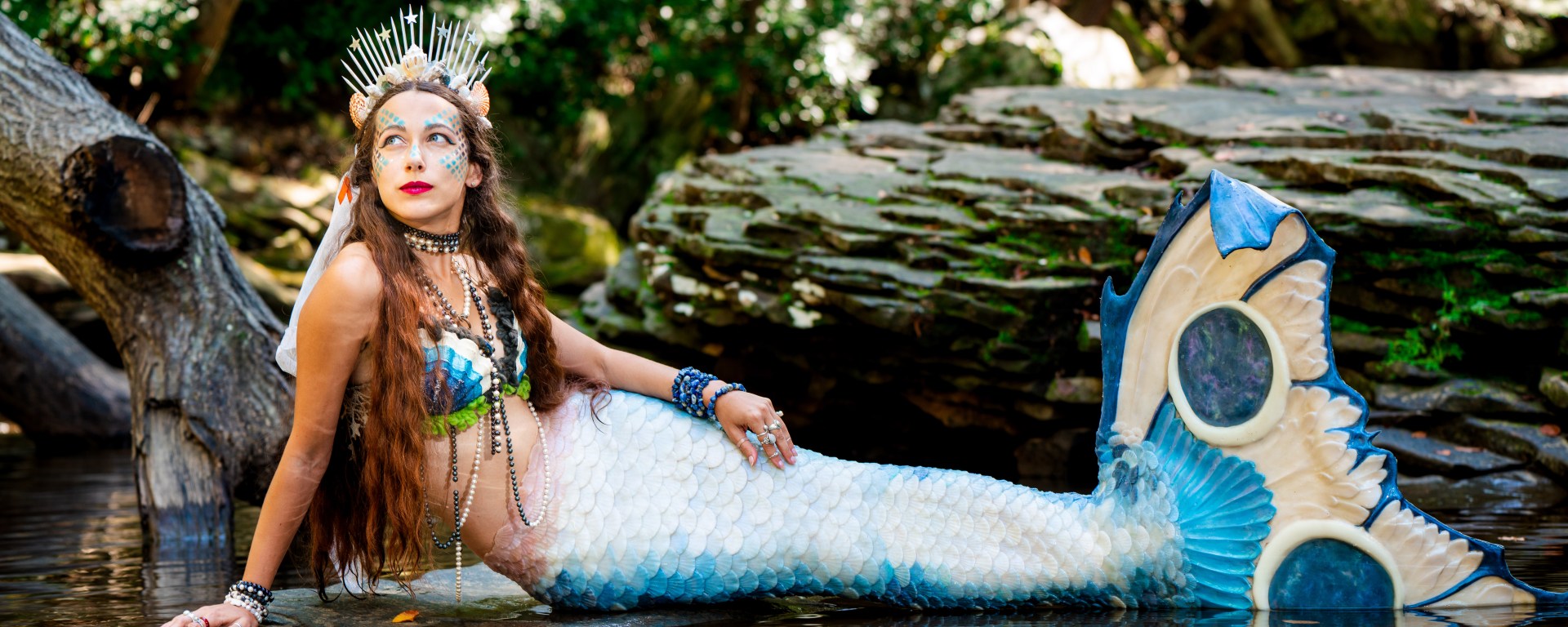
“Surely woman rose from the frothy sea, as resplendent as Aphrodite on her scalloped chariot.” ― Margot Datz, A Survival Guide for Landlocked Mermaids
Summer is a wondrous, magical time; more than a season, its solstice is the opposite of the dark, when the spirits beyond the veil seem poised to haunt. Summer’s longest day is full of light; sparkles of sun shimmer on salty waves or freshwater ripples. Out of the corner of the eye, you might glimpse a fluke as it dips below the water; you may hear the lilting melody of a siren’s song.
You may encounter a mermaid.
Scylla. Dysebel. Shan. Mera. Mami Wata. Madison. Ondine. These magical creatures have existed in cultures across the globe for thousands of years. In 1,000 BCE the Syrian goddess Atargatis dove into a lake and transformed into a fishlike creature and mermaids have continued to appear in worldwide stories, myths, and fables from Finland, Dutch East Indies, Hong Kong, Japan, Russia, France and more in the centuries since. In all directions and climates, where there is water, there are whispers of women who balance between the land and the sea, some of whom are benevolent, some who are fearsome. From Hans Christian Anderson’s 1837 “The Little Mermaid” (which inspires more than the Disney film, it also serves as the basis for the Filipino television show Dyesebel) to J.M. Barrie’s Peter Pan and even SpongeBob Squarepants, mermaids have swum into myriad stories.
Whether in folk legend, film and television, literature, or fine art, you can find the water-bound fae singing their siren songs, as in Homer’s Odyssey, adorning storefronts and packaging for the largest purveyor of coffee in the world, healing and haunting in African legends, or soaking in a salt bath in a 1980s New York City apartment.

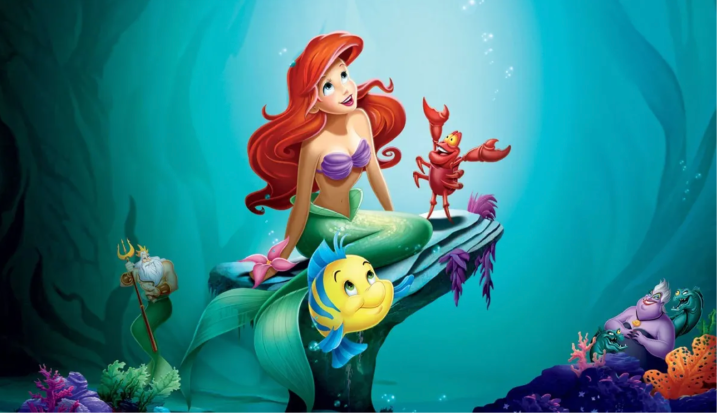
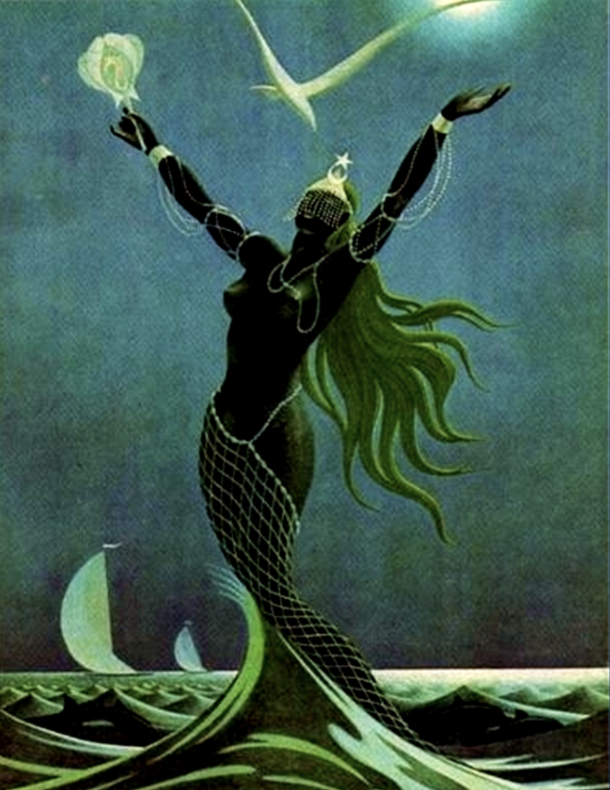



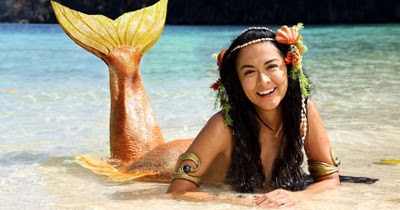
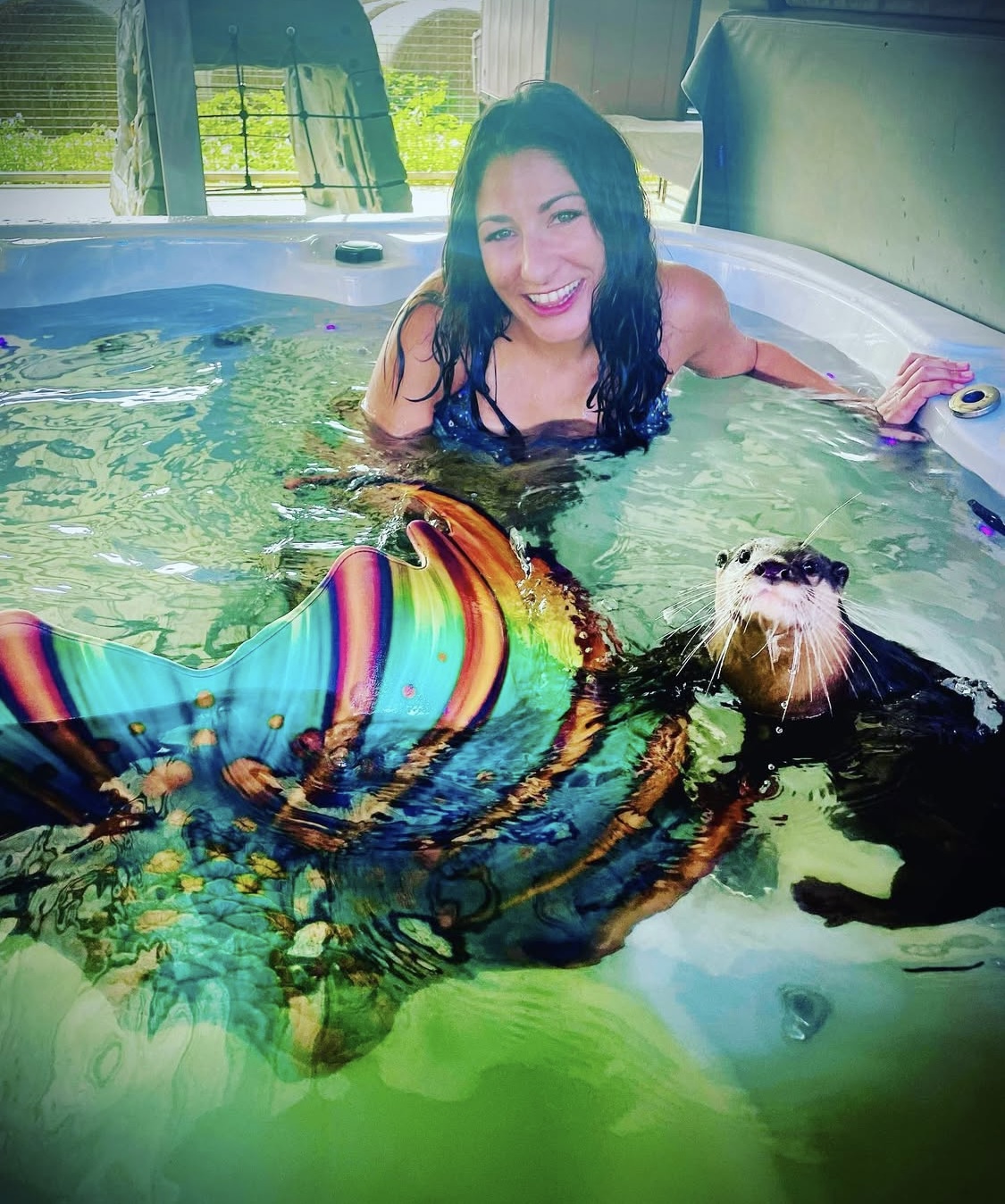
In contemporary circles, mermaids have found immense popularity for those seeking an opportunity to immerse themselves in an alter ego. Intrepid sea-loving humans of all orientations create “mersonas,” characters with names, custom tails and other garments, exquisite makeup, and even family units called pods. For some, this is a professional endeavor. They may perform at faires and festivals (Carolina, Arizona, Scarborough, and Michigan, are just some of the faires where guests can encounter living mermaids), make appearances at aquariums, swim with guests at backyard pool parties, or work as artisans crafting beautiful handmade garb and accessories for mermaid fans. In each of these settings, mermaids bring something truly magical to events large and small: advocacy, diversity, individuality, and strength.

Strength:
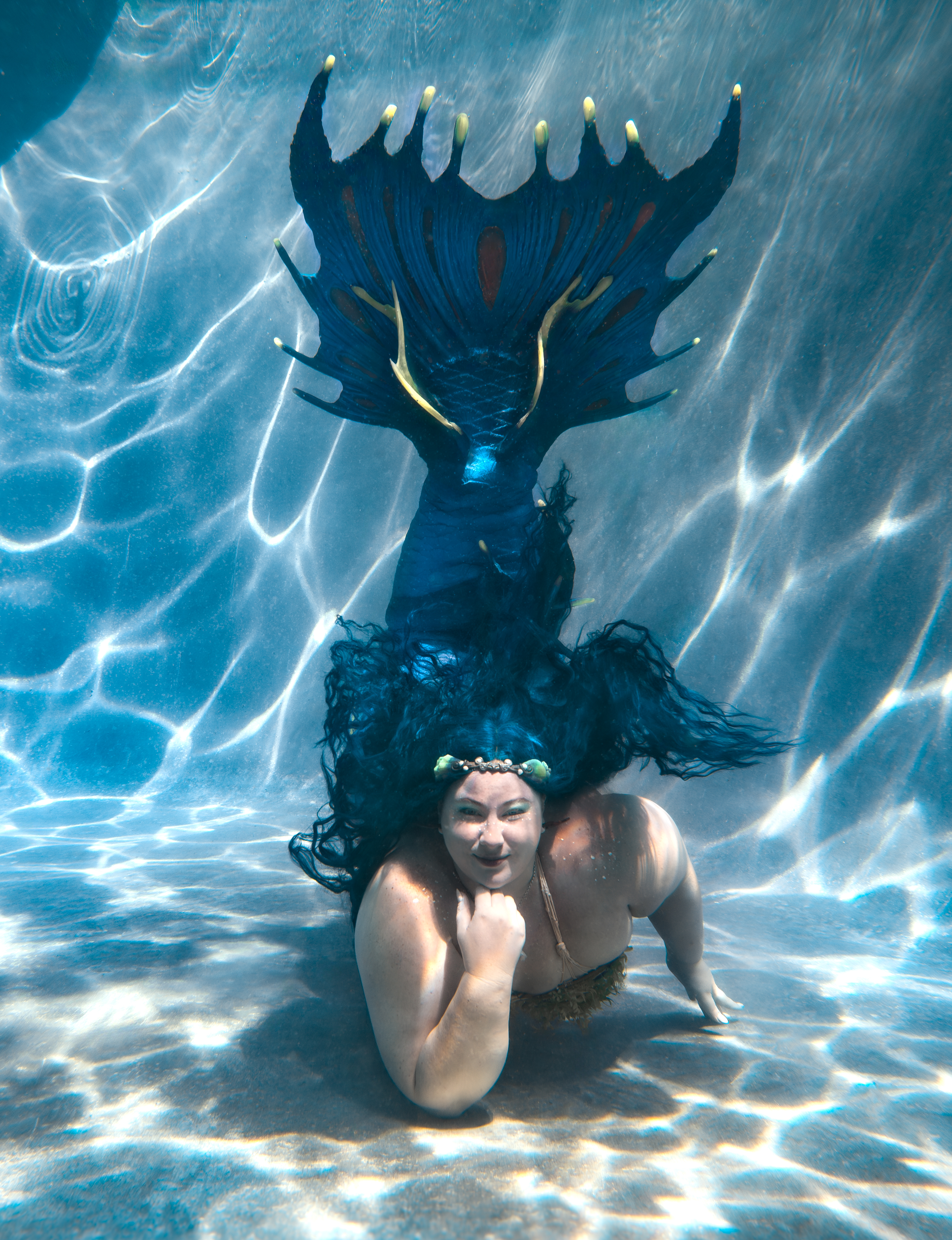
Watch a mermaid performer swimming and you’ll immediately be struck by their athleticism. Moving gracefully and safely through water while managing a silicone tail is not for the weak or under-prepared. Alexis, who performs with the Circus Siren Pod (appearing at the Arizona and Carolina Renaissance Festivals among other large venues) describes a regimen of underwater weight training and exercises to develop her ability to hold her breath, supported by “certifications that include advanced scuba, freediving… practicing new and slow movements to help [her] lungs train to be able to move fluidly in the water while conserving energy.”

Individuality:
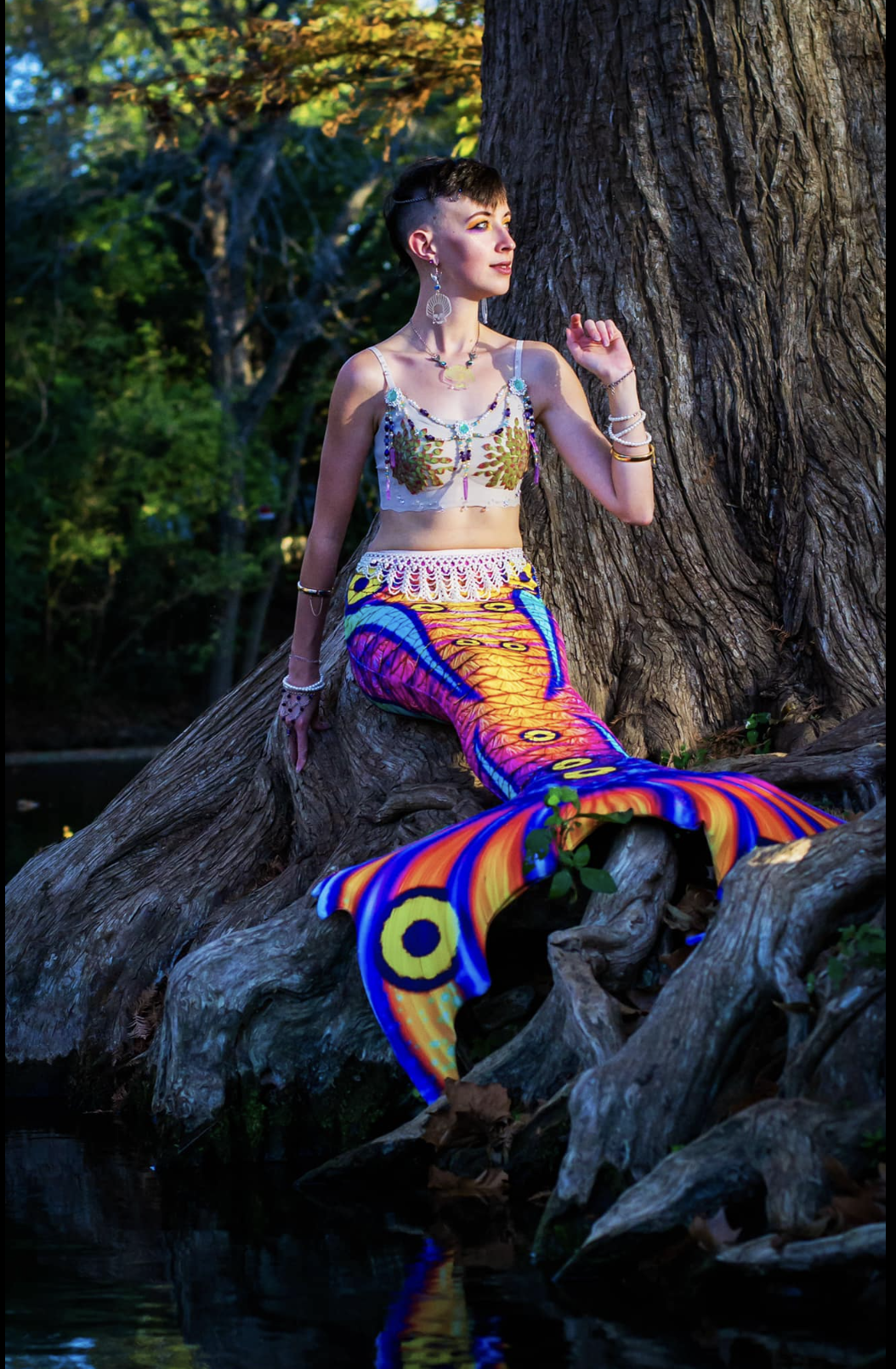
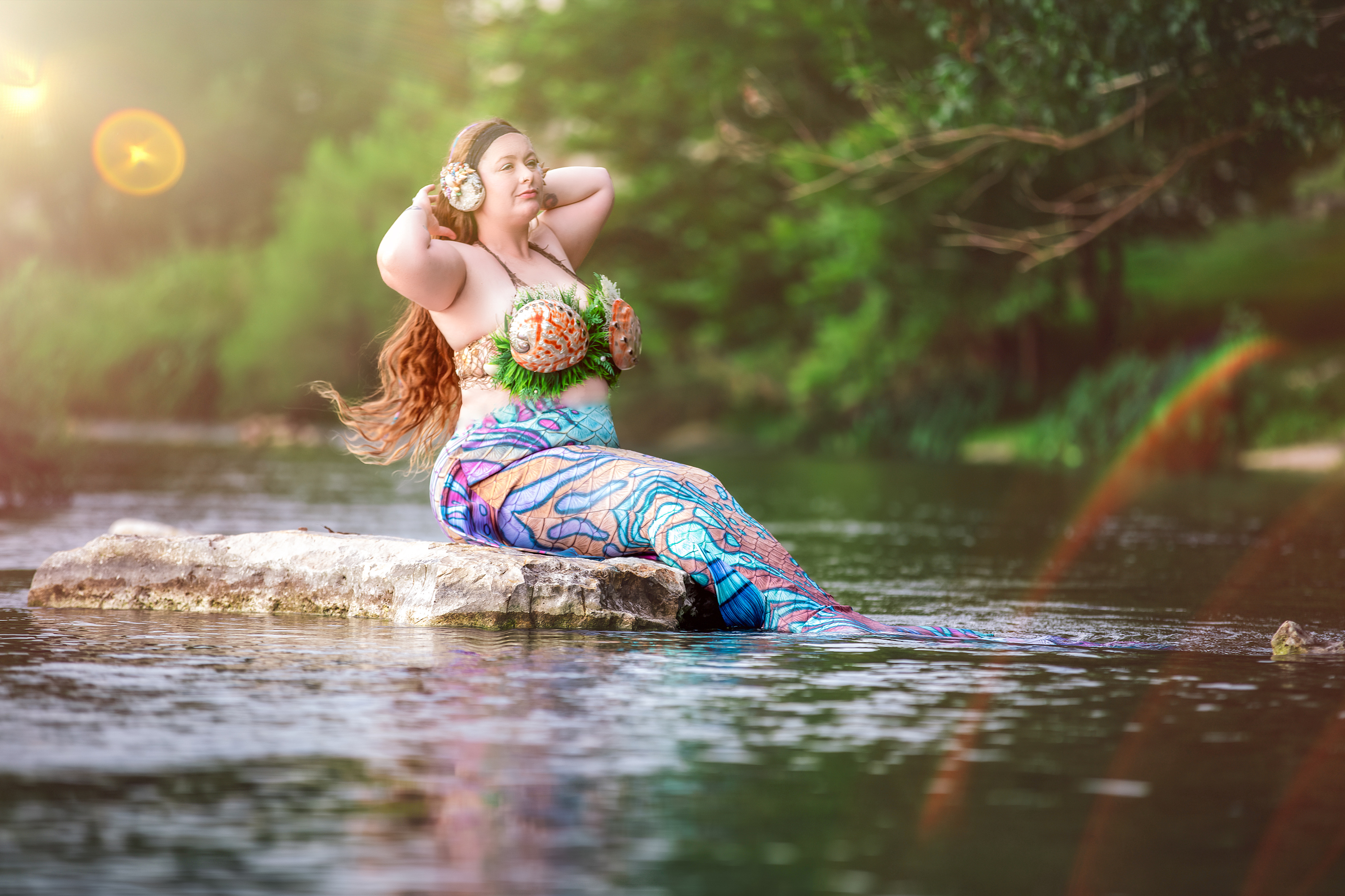
Mermaid characters are as varied as the waters of the Earth. With backstories that place them in the Rhine, the Carribbean, Lake Erie, or the Black Sea, the performers seen at faires and festivals have developed entire histories for their characters. They also envision the look of their “mersonas,” choosing colors, makeup palettes, and costumes. Performer Leah prefers “barnacles over bling” and designs and creates most of her accessories including tops, crowns, jewelry and waist wraps. Like most of the other performers, she’s also developed original games and entertainment to engage audience members.
Mermaid performance doesn’t always simply mean the creation of an outer “mersona” – it can also lead to a journey of self-discovery and expression of the truest self. Performer and artisan Emylie shares, “Adulthood hit hard and I found myself constantly struggling to simply navigate the whirlpool of life. Fun and fantasy temporarily were out of reach, and I spent entirely too much time trading my magic for normalcy….Curiosity struck, and then a google search later, I had a mermaid tail in my shopping cart. And there we had it, just a little desire to be ‘extra’ and comfortable under the water and your fishy friend was born.”


Inclusion:
Of course, we are accustomed to seeing young girls embracing the sparkle of the scales. But some of the most touching stories of guest encounters are about little boys who are enchanted by these beautiful, strong women. In a culture that has struggled to allow little boys to embrace things perceived as feminine and beautiful, these mermaids may serve as bridges into the world of fantasy that reaches beyond traditional gender roles. Shannon of Circus Siren Pod describes a favorite interaction with a boy “who was about three or four when we first met. His mom reached out a couple weeks before one of my mermaid residencies at an aquarium in upstate New York, sending me a photo of him in his mermaid-scale leggings so I’d know to look for him. Sure enough, he was front of the line at that show—and many shows after. I have art he made for me, photos of us together, and learned through his mom that I became his show-and-tell topic… and even ended up as a photo on one of his birthday cakes. Years later, I wrote him as a character in one of my children’s books. He was so proud.”
The duality and otherness of mermaids also resonate for the the queer community. Mermaids in local communities form “pods,” small groups of mermaiding enthusiasts, through which those exploring different facets of their identity—especially gender—find comfort.

Advocacy:
Beyond positive impact on wee humans, mermaid appearances also help to spread a message of care of the planet and those that share it with us. Alexis, Leah, and Loreley are intentional in their advocacy for conservation efforts, sustainability, and animal rights. Graceann, an environmental educator, believes that “teaching as a mermaid character makes it all the more enjoyable for children.” For sharks, coral reefs, and more, these mermaids speak on behalf of the beautiful tides and their inhabitants.
Ultimately, like so much of what brings Renaissance faire enthusiasts joy, mermaid life is about connecting with magic. It might be the magic of memory, as MerKat describes: “I grew up going fishing with my dad and would always go down to the water by the docks and play mermaid.” Or perhaps it is connection with little ones: “[For] Kids… the nature of the magic changes from them thinking I am a real mermaid to understanding that I am a performer [who has] been… a friend and constant presence in their festival experience,” says Aysun.
As author Tabi Card writes in Mersong, “The ocean has a voice, one that haunts me with its music every moment I’m awake. Even in my dreams it tugs on me, building the ache inside my bones until I can’t ignore who I am.” We can’t ignore these beautiful myths, the women who embody them, and the seas that nurture us all.

For inspiring reading, may we suggest:
Tales of Indigenous American mermaids in Mermaids and Medicine Women: Native Myths and Legends (collected by Basil Johnston)
Mermaids: Myth, Kith and Kin by Akanksha Singh in JSTOR, a nonprofit library for the intellectually curious
The Deep by Rivers Solomon: Descendants of pregnant African Women who were thrown overboard by slave owners live in an underwater community… their traumatic past is often forgotten because the memory is too hard to bear, but one person must remember it.

Kim Bryant is a veteran performer, educator, and writer. With 25 years teaching experience, an adjunct professorship in Theatre, and twenty years in the festival world, she brings a wealth of experience to LadyFaire Magazine. She earned her Bachelor’s degree in Education from Lubbock Christian University, a Master’s degree in Theatre from the University of Houston, and a Master’s degree in Communications from Southern New Hampshire University. Kim has studied at Actor’s Studio of Chicago, the Royal Academy of Dramatic Arts in London, and at New York’s Lincoln Center, and currently works in leadership for Disney Live Entertainment.
 ladyfairemagazine.com