

August is summer’s high season, with a variety of fruits and vegetables reaching their peak, and livestock well-fed with the fresh grazing available as preparations for the fall begin. The treasures of field and garden are in abundance. In a 2011 BBC News article, Ivan Day, British food historian, made a case for garden peas being the UK’s national vegetable.

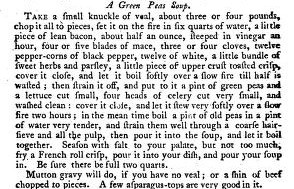
Hannah Glasse included an easy peasy(!) recipe for Pea Soup in her 1747 book The Art of Cookery Made Plain and Easy:
“It grows easily throughout Britain, and has done for centuries. Its name dates from Chaucer’s time, when it was known as pease. In its dried form, the pea is the basis for traditional staples such as pease porridge. When eaten fresh, with little more than butter as a garnish, it was prized by Tudor kings and commoners alike as a welcome burst of bright green in summer.”

To take advantage of fatted stock, a recipe from two medieval cookery books gives us a way to prepare steaks for grilling. Verjuice, a medieval condiment made from grapes is called for in the original recipe, but Seville oranges are suggested by the Medieval household book Le Ménagier de Paris (the Goodman of Paris). It is suggested to garnish the finished steaks with cinnamon, which strikes me as a very Medieval touch you may wish to forego. This recipe is found in the British Museum’s blog.
Spit-Roasted or Grilled Steak
Ingredients
• 6 fairly thin beef steaks
• Oil or fat for grilling
Basting sauce:
• 2 tsp red wine vinegar
• 1–2 tbsp Seville orange juice
• 4 tbsp red wine
• Pinch each of ground black pepper and ginger
Garnish:
• Sprinkling of ground cinnamon
Method
Nick the edges of the steaks and grease them. Mix the sauce ingredients in a jug, adjusting the proportions if you wish. Then grill the steaks as you prefer. Warm the sauce and sprinkle a few drops over the meat while grilling it. Serve the steaks lightly sprinkled with cinnamon and any remaining sauce.
Vatrushka Buns
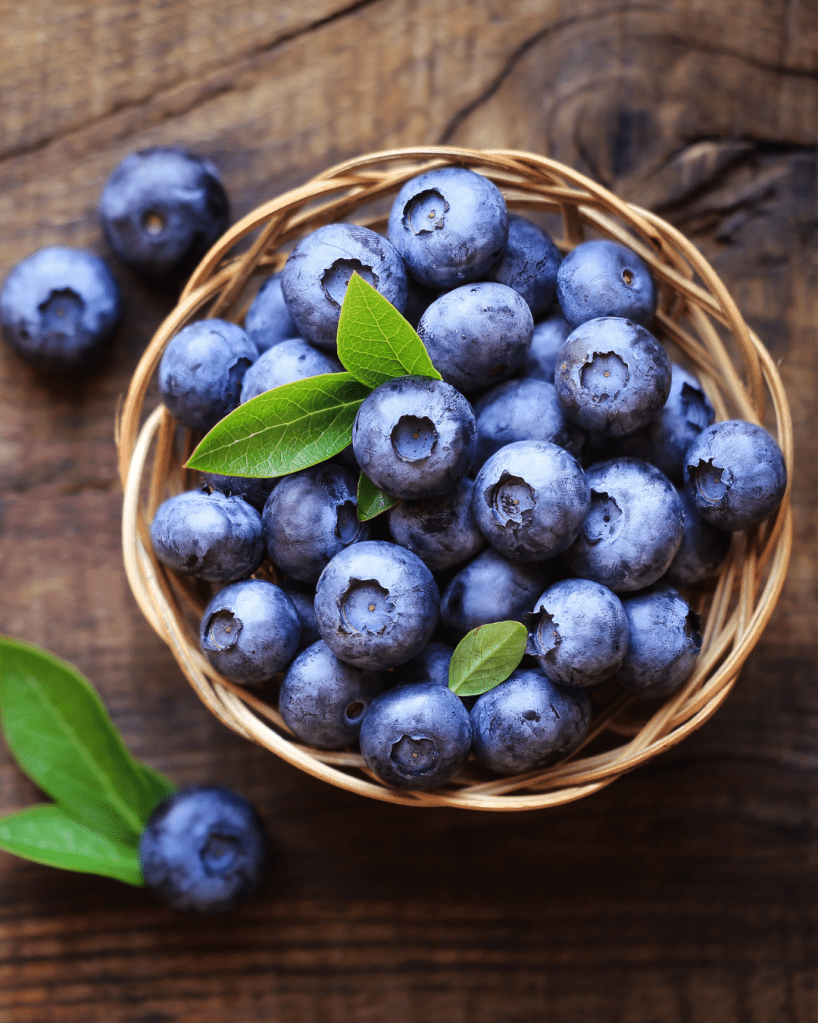
In the United States, blueberry season runs from April through October, with the peak being July and August. A Slavic baked treat is Vatrushka buns; they are similar to our modern Danishes, with soft bread surrounding a fruit and cheese filling. The traditional filling is made with Tvorog, a soft, lumpy cheese that was sometimes replaced with Quark, a German style soft cheese. Their texture is similar to ricotta or cottage cheese. These buns have Polish, Russian, Ukranian, and Romanian histories. In addition to this sweet version, savory versions are also made, using ground meat and onion fillings. It requires a little time, but you will be well-rewarded!
Tatyana Nesteruk is a food blogger, content creator, and cookbook author. This recipe is a treasured one from her Tatyana’s Everyday Food website; she also has a video tutorial!
Ingredients:
For Yeast Dough:
- 1 cup whole milk
- 1 1/2 tbsp dry active yeast
- 1/2 cup sugar
- 1/2 tsp sea salt
- 1 tsp vanilla extract
- 2 large eggs, plus 2 egg yolks
- 1 1/2 cups unsalted butter, melted
- 5 cups all-purpose flour
For Cheese Filling:
- 8 oz cream cheese, softened at room temp
- 1 large egg
- 1/4 to 1/2 cup sugar
- 1/2 tsp salt
- 2 tsp vanilla extract
- 2 cups farmer’s cheese, tvorog
- 1/3 cup blueberry preserves, or other fruit or berry jams
For Streusel Topping:
- 1/4 cup all-purpose flour
- 1/4 cup white granulated sugar
- 2 tbsp unsalted butter, cubed & chilled
- 1 tbsp cream
Additional:
- 1 large egg, well-beaten
Method:
Making the Yeast Dough:
Heat the milk in the microwave or on the stovetop until it’s between 120°F and 130°F. Pour the milk into a large mixing bowl, whisk in the sugar, then sprinkle the yeast over the top, mixing it lightly with the milk. Allow the yeast to proof for about 5 minutes, until it’s bubbly and foamy.
Next, add in the salt, vanilla, eggs and egg yolks, and the melted butter, cooled. Whisk until the mixture is uniform. Gradually begin adding in the flour, whisking well after each addition. Switch to a spatula once the dough starts to pull together.
Sprinkle your work surface with flour, then turnout the dough. Knead and add in the rest of the flour. Knead for 12 to 15 minutes, until the dough is smooth and elastic; about 20 minutes using a mixer.
Place the kneaded dough back into your mixing bowl for proofing.
First Proofing:
Find a small pot and fill it halfway with boiling water. Make sure the bottom of your bowl doesn’t touch the water! Place a towel over the dough, then let it proof in a warm corner of the kitchen for 1 ½ to 2 hours, until doubled in size. Replace the water every 30 minutes, keeping the dough warm.
I like to keep my dough next to the stove where it’s nice and warm, especially if I am using the oven.
Making the Cheese Filling:
In a large mixing bowl, beat the softened cream cheese for a minute, until it’s smooth. Add in the egg, vanilla, sugar, and salt next. You can use between ¼ and ½ cup sugar; adjust to taste. Mix these all together.
Next, add in the tvorog or farmer’s cheese. Beat again until a uniform, creamy mixture forms.
Need to use cottage cheese? Line a large strainer with a cheesecloth and add about 3 cups of small or large curd cottage cheese. Rinse the curds with cold water, then let the liquids drain. To ensure the curds are extra dry, wring the cheese inside the cheesecloth.
Making the Vatrushka Buns:
Gently turn the proofed dough out onto a clean work surface. Using a table scraper or a sharp knife, divide the dough into 16 equal pieces. Gently shape each piece into a ball, without over-kneading the dough!
Line two, large baking sheets with parchment paper or silicon mats. Evenly space out each ball a few inches apart.
Next, make hollows for the filling. Use the bottom of a glass or jar (about 1 ½ to 2 inches in diameter) and press into the center of each ball. This will flat the dough and create a space in the center.
Pierce the hollow with a fork, then fill it to the top with the cheese filling. Add a teaspoon of preserves on top.
Second Proofing & Streusel Topping:
Preheat the oven to 350°F. Place your sheet pans with the buns onto the stove top where it’s nice and warm. Proof the buns for 30 to 45 minutes, until the dough is fluffy.
For the streusel, place the flour, sugar, and cold butter into a food processor. Pulse until fine crumbs form. You can also do this step using a pastry blender.
Slowly add in the cream, a few teaspoons at a time with the processor running. Add just enough cream for the flour and butter to form small crumbles.
Use a pastry brush to gently apply the beaten egg onto the dough, around the filling. Sprinkle the prepared streusel topping over the filling and the top.
Baking Instructions:
Bake the blueberry and cheese vatrushka buns at 350°F for 30 to 35 minutes, until they’re a rich, golden-brown color. To bake the two pans at the same time, space out your oven racks and stagger the pans so they’re not on top of each other. This will allow for more even baking.
If you don’t have two oven racks, place the second pan into the refrigerator to keep the dough from over-proofing.
Once the buns are done, remove them onto a wire rack to cool for at least 20 minutes. The cheese filling will be very hot at first!
Storing Instructions:
You can enjoy these delicious cheese buns while they’re warm with a cup of coffee or tea. Once they’re cooled, place the buns into a sealed container or closed bag. Store these at room temperature for up to 2 days, then in the refrigerator for up to a week.

Christine Boyett Barr is an award-winning journalist and English instructor, teaching high school and college English. In addition to her pedagogical pursuits, she hosts movie events for the Alamo Drafthouse Cinema and portrays Catherine of Aragon at the Texas Renaissance Festival. She is the mother of four and is owned by two cats.
 ladyfairemagazine.com