

In the 50+ year history of Renaissance festivals, trinket trading is a relatively new phenomenon.
As the concept is embraced by new people without an understanding of its origins the practice is at risk; many shows have, with valid reasons, begun to outlaw the practice within their festival grounds.
Originally, trinkets, or favors, were swapped amongst cast members at a Renaissance Festival. They were small items that could be pinned or tied to a costume to remind one of a character or shared experience, perhaps evoking a specific season or moment; for example, a flubbed line during a pub sing, like “Four and twenty husbands baked in a pie“ inspires a pie-shaped pin or a fake advert for Mrs. Lovett’s pie company or “Sweeney Todd: when your divorce lawyer can’t get the job done”. Trinkets were tiny because they were costume elements pinned onto a costume or tied with a ribbon to one’s mug handle so that one could see their affiliation with others.
These tiny trinkets were mementos of friendships made, of characters interacted with, or perhaps of a joke laughed at, inspiring the wearers to return for more days each season.
Renaissance festivals have always blurred the line between participants and playtrons or pet patrons (a pet patron is a guest who is a familiar face and regular visitor to any specific shop or show within a Renaissance festival), so it is not a surprise that patrons began making favors or trinkets and swapping them by the dozens.
We love Renaissance festivals for the friendships we make within them. It’s about personal connection.
With the post-Covid boom for Renaissance festivals, and partially related to the overlap of Renaissance festival crowds with EDM crowds … trinket trading has evolved.
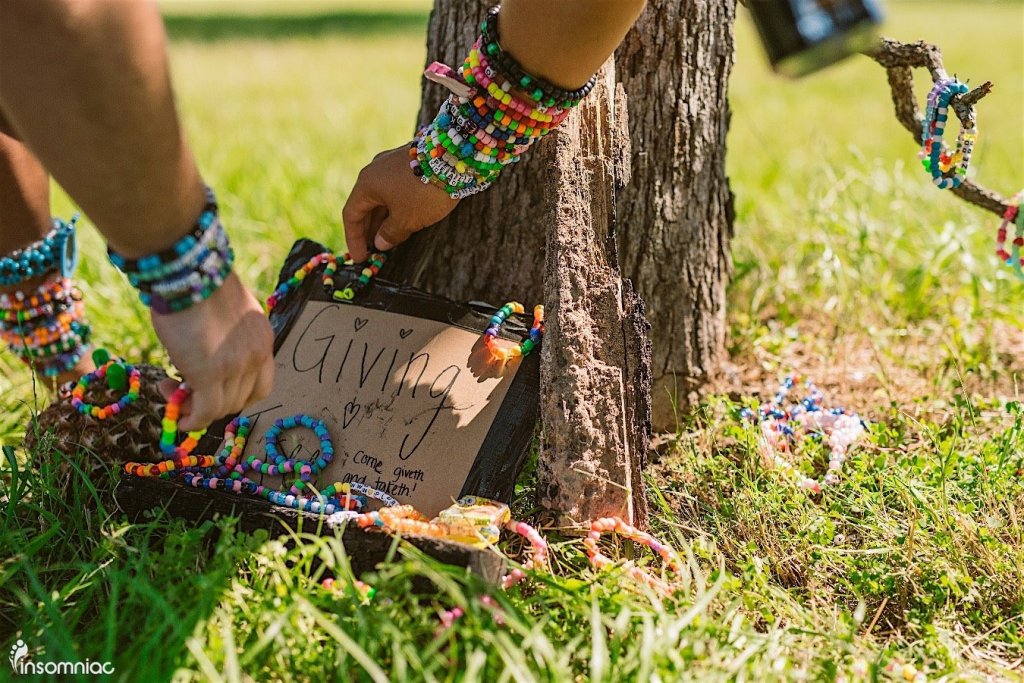
At EDM festivals, trinket trading is a way to communicate in a space where conversations are challenging, fostering community. They might be a “remember me” on a scale of hundreds, leading to trinket items being purchased in bulk more often than made by hand. Festival memories include the size of one’s “trinket haul,” and while the baubles might be a reminder of a specific event, it is not as nuanced as the old trading of character-based or story-based cast trades at Renfaires.
If the value of trinket trading is measured in quantity, not quality, thousands of tiny plastic ducks, mushrooms, and dragons enter the chat. Because Renaissance festivals have long been considered a more environmentally-friendly version of a theme park (grass instead of pavement, handcrafts rather than souvenirs), the prevalence of plastic and the mass-produced nature of these trinkets is one of the complaints…
and there are lots of complaints, the biggest being that trinket traders are disrespecting the venues within which they are playing.
Renaissance Festivals exist as an economic machine due to the balance of artists, performers, vendors, entertainers, and service providers, professionals who have built the environments and filled the streets and stages with the sights and sounds we love. They are there because it is the career they have chosen. They’ve committed years of their lives to fine-tuning their art, their performance, and the spaces from which they sell:
Unintended Impacts on the Venues that the Traders Claim to Love Deeply:
- Reduce vendor sales: traders sometimes interrupt conversations between buyers and sellers or trade items that impact a product line that a crafter has curated for sale.
- Sneak in advertisements for their own products: without having made an investment in the park. Example: soap samples with a business card attached, undercutting established, approved vendors without having been through the jury process of the festival.
- Liability for guest injury: Glass items and consumables are discouraged or prohibited by most festivals due to the possibility of breakage, injury, or harm from the consumption of products. Vendors within the parks carry liability insurance as a requirement of their contracts, while traders have no insurance requirements. If an injury occurs due to a trinket, who will the injured party come after? It won’t be the trader. It will be the festival.
- Trinket trading may provide a front for unvetted people to interact with the public as if they are characters within the park. There are too many examples of adult males making trinket trades that would only be of interest to young females or offering their trade items only to specific individuals they “like the look of.”
- At shows with a heavy trinket trading culture, performers report larger and larger percentages of their tips showing up as bits of plastic and keychains. No one is complaining about a toddler giving them a toy instead of a couple of coins, but children have to be taught what tipping culture is, and it is not trinket trading. Performers pitch the cost of their show to festival management knowing that their income will be augmented by tips. They could charge a festival more, but that might price them out of your local festival’s budget.
All of these reasons and more have many festivals establishing rules or designated areas for trinket trading amongst their park guests or banning the practice entirely.
Some best practices to help keep the Trading culture alive at your local festival:
Supporting the economic ecosystem doesn’t mean you have to buy something from every vendor, but it does mean being mindful that your activities should enhance rather than detract from the commercial environment that sustains these festivals
So how can we preserve this interactive play?
Looking forward, the most successful trinket trading communities will be those who figure out how thoughtful trading can coexist with commerce. This isn’t an either/or situation; both can thrive when there’s mutual respect and understanding.
Ways to evolve the practice while respecting boundaries might include developing community guidelines, creating designated trading areas or times, or finding ways to support vendors while still engaging in gift exchange.
Trading with Heart and Wisdom…
Community building, unexpected joy, and personal connections are real and valuable. I’ve seen friendships form over a simple exchanged pin, and I’ve watched shy festival-goers bloom when someone offers them an unexpected small gift.
The future of trinket trading depends not on what festivals allow or forbid, but on how thoughtfully the trading community chooses to participate in the larger Renaissance festival experience. When done with heart and wisdom, trinket trading becomes another thread in the tapestry of magic that makes Renaissance festivals special.

Rhonni DuBose‘s 30-year journey through the Renaissance Festival circuit has seen her evolve from a shop designer and builder to a multifaceted entrepreneur dedicated to industry advancement. Rhonni.com hosts articles by industry experts (Festival Prose), and educational resources for Renaissance Festival professionals. Resources include the Renfaire Vendors Blueprint (a comprehensive program that demystifies the unique business ecosystem of Renaissance Faires for aspiring merchants); a growing collection of specialized guides, and the forthcoming launch of the Renfaire Foundry (a database specifically designed for faire founders and administration teams.
 ladyfairemagazine.com