

Renaissance faires and comic cons abound throughout the year, all popular places for our readers to don outfits that embody their imaginations. It’s a hugely popular element of Renfest culture; many of us have entire closets, even rooms, devoted to the creation and keeping of our costumes. It’s almost always a harmless, fun way to explore alternate personalities or aspects of who we are- dressing as a fairy, pirate, or noble queen is definitely more engaging than wearing jeans and a tee (though perhaps not more comfy). But what happens when our costumes actually cross a line and become problematic? How can what we choose to wear in playful settings offend or even wound others? Singer Katie Perry’s 2013 AMA performance as a geisha and model Karlie Kloss’s appearance in American indigenous ceremonial clothing for a Victoria’s Secret fashion show are large-scale examples of appropriation, but private citizens can misstep as well. Contributor Vivian Orozco explores how we can reframe our thinking around the subject to honor and respect diverse cultures at our faires, festivals, and conventions.


It’s that time of year, folks. The leaves are changing, the pumpkins, ghosts, and other fall decorations are on display. For those who celebrate Halloween, this is the time of year to select a costume of choice for trick-or- treating, or perhaps for a costume party. Inevitably, the talk of Cultural Appropriation also surfaces, like clockwork. Having seen many heated discussions on this topic not just on Halloween, but year round, I set out to gain a better understanding of the conversation around cultural appropriation.
Appropriation vs. Appreciation
Yes, there is a difference between cultural appropriation and cultural appreciation, the latter of which is also defined as cultural exchange. However, the conversation around this topic can sometimes act as a double edged blade, placing people on the defensive and often making people afraid to engage with and learn about another culture. So, the question is not just how to get people to listen and participate in discussions about appropriation, but also encourage curiosity and a desire to participate in cultural exchange. I have found, in today’s age of blanket statements, hard lines, and inflammatory social media posts, that reframing the conversation is vital.
Cultural appropriation is defined as an instance of cultural exchange which aggravates, entrenches, trivializes, or mocks a power imbalance between an enfranchised adopter and a systemically oppressed originator. By contrast, Cultural appreciation is when someone seeks to understand and learn about another culture in an effort to broaden their perspective and connect with others cross-culturally. In context, there’s a very thin line between these two definitions. The bottom line is actually quite simple: What you’re saying, how you’re saying it, and who you’re saying it to, can change the meaning of an expression.
It’s easy to draw lines, but harder to ask who’s being hurt in this exchange, or examine the differences in power and privilege. Adopters leverage their immunity to consequences to profit from an expression in a way that originators cannot, and then add fuel to the fire by trying to defend that immunity.
Many disagreements over whether something is appropriative have to do with different groups’ ability or lack thereof to recognize a pattern. For example, wearing a Qipao, a traditional Chinese dress, as a non-Chinese person, may begin as an innocent embrace of cultural fashion. However, add in the context of going to prom in that dress and taking a photo in stereotypically “Asian” pose, and it is no longer innocent, but ignorant and hurtful. The example, by the way, actually happened. The young woman in question did not think about the minority experience, where bullies mock young Asians on the playground with cultural expressions, and chose to feed into stereotypes propagated by the media.

Intent, Approach, and Impact
Focusing on what is appropriative rather than what is appropriation can help us be more mindful in our choices. Keep in mind that the key difference between cultural appropriation and cultural appreciation lies in the intent, approach, and impact. As you begin looking as your costume choices this year, ask yourself these questions, taken from author Lara Estaris’ enlightening article on the topic:
- Do I understand the significance of what I’m doing here?
- Am I honoring this culture or simply imitating it?
- Am I perpetuating a stereotype that might hurt those who belong to this culture?
- Am I doing this as a personal opportunity to interact with and experience another culture, or am I doing this for a photo I can post online?
Mindfulness and understanding are verbs. They require action. Taking these steps not only makes one more aware of what they are getting themselves into, but also helps them understand why wearing things like a Native American feathered warbonnet or a Mexican Sombrero and mustache are offensive. Clothing, however, is the tip of the iceberg, albeit one of the most visible, and we all have to start somewhere.
In closing, I’ll leave you with these thoughts from cultural consultant James Mendes Hodes, who’s written a more in depth exploration of cultural appropriation:
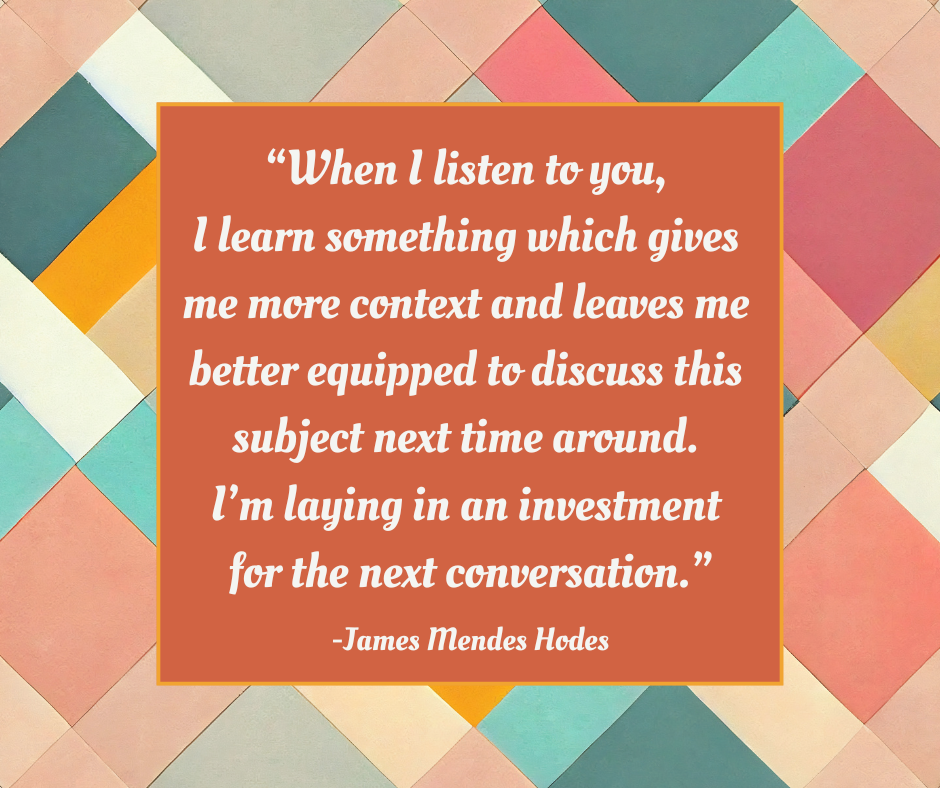
Let’s make an investment for the next conversation with this one.

Vivian Orozco (Vixie) is a Latina tailor who has a passion for historical and multicultural clothing. She enjoys studying fashion and its historical and cultural evolution in the modern era. While pursuing a Bachelor’s degree in costume design, she discovered a passion for the clothing of the past, as well as missed opportunities in using silhouettes from around the world. In addition to costuming, Vixie is also a film maker, cosplayer, artist, content creator, and TTRPG enthusiast.
For further learning, we suggest the PBS piece “Let’s Talk About Halloween Costumes and Cultural Appropriation” by Beatriz Alvarez.
 ladyfairemagazine.com