
Much ado has been swirling around Hamnet; released in December by Amblin Entertainment, the film has eight Oscar nominations, including Best Picture, Best Actress, Best Directing, and more. Based on Maggie O’Farrell’s novel, directed by Chloe Zhao, and starring Jessie Buckley and Paul Mescal, the film is the contemplative companion to 1999’s Shakespeare in Love, another film we adored.
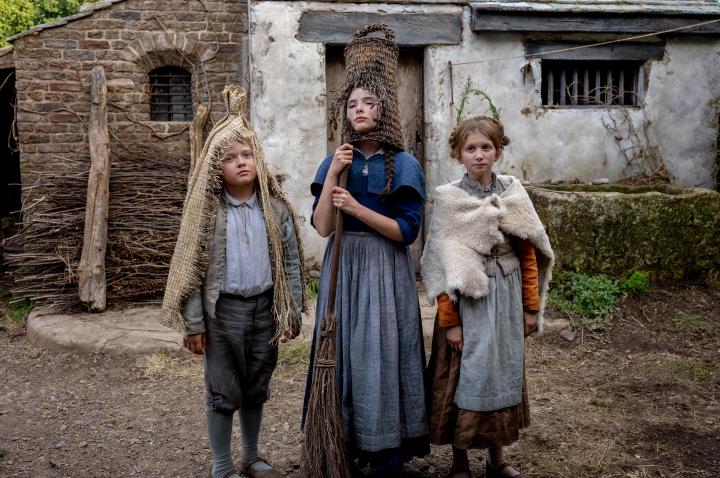
Where SIL was pristine and light-hearted, Hamnet is a touch grimy, balancing deftly between grounded historical reality and wistful, heart-rending moodiness. Readers of this magazine likely recognize the historical trappings of Elizabethan England: half-timbered homes with dim interiors, doublets and skirts, ink and quills, and English stoicism are well-known to the many Anglophiles and history buffs who populate the lanes of Faire villages across the country.
But this film goes ever so much beyond the surface, it gets to the very heart and breath of what it is to be human- to love, grieve, and sacrifice nearly all in pursuit of answering one’s deepest calling.
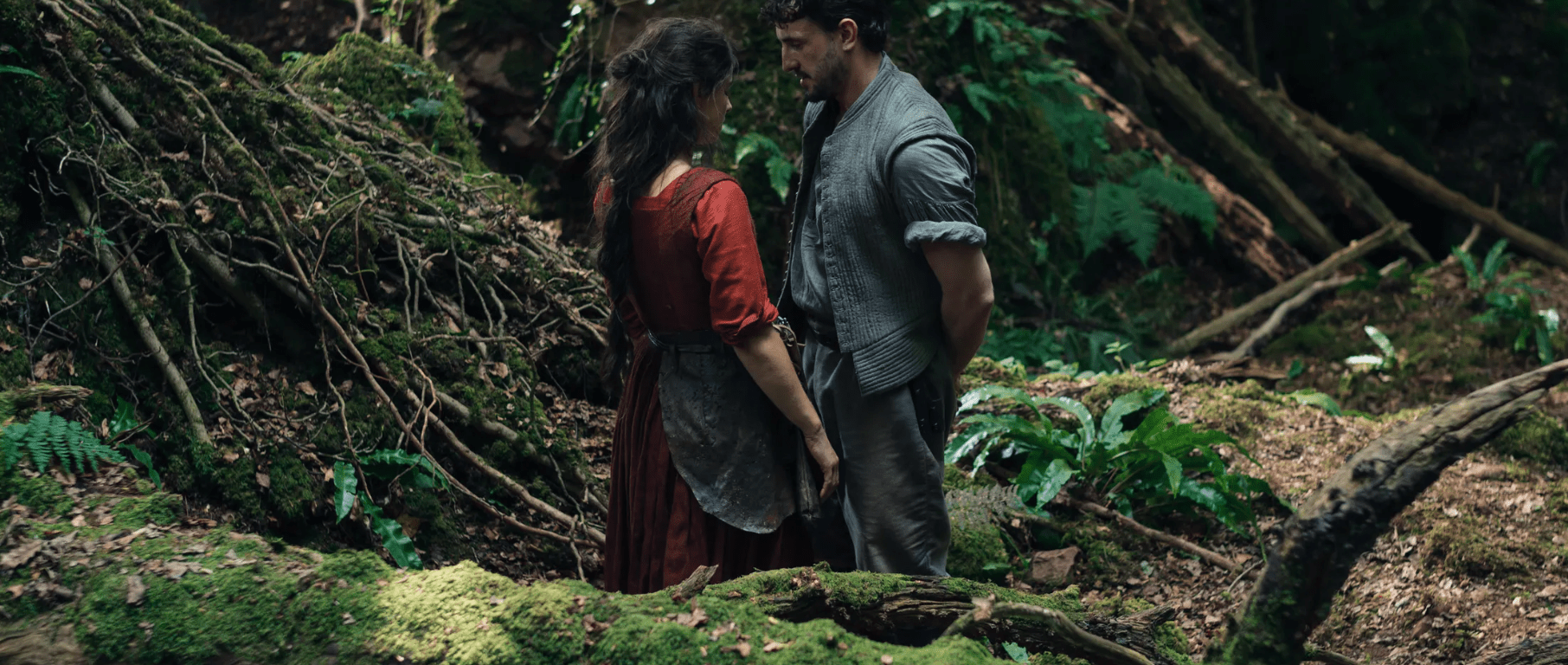
The first image we are invited to see is of our heroine, Agnes, clad in scarlet, nestled among the roots of a giant tree; we immediately understand that she is of the Earth, but perhaps not of the world she lives in. She will encounter Will within a few moments; thus their love story begins.
It is no spoiler to say that the film taps into universal themes of grief. Shakespeare’s family history is not well-known: his father was a glover whose finances appear to have been difficult, there is speculation about his marriage to Anne (Agnes) Hathaway. But about one thing, there is clarity: his son, Hamnet, died at the age of 11. The film supposes that the play often considered Shakespeare’s greatest, Hamlet, is a study of a father’s grief at the loss of a beloved son. There’s no real knowing whether that’s true, but it isn’t really relevant. This is a feature based on a novel, and its beating heart is the love that binds this family together.
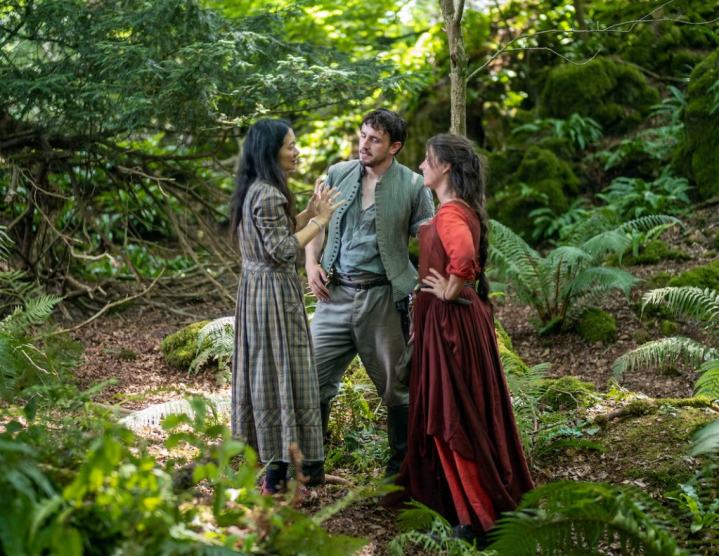
Poetic imagery is used throughout: grasses and trees blow in the gentle English breeze; a yawning chasm of darkness looms as Agnes births her first child, Susanne; floodwaters invade the chamber where she later gives birth to her twins; the spectre of young Hamnet is still seen even after the tragedy of his passing.
But the breath- oh the breath. The breeze, the infants, Agnes… all suspend, release, and expand with such beautiful exhalation. To let a story unfold amid moments of quiet stillness, to allow the audience opportunity to absorb and reflect while still immersed in the story is a luxury few filmmakers allow in the contemporary multiplex setting. Critics might say the pace is too slow; we contend that Zhao’s direction and Affonso Goncalves’ editing, assisted by Max Richter’s score, are intentional and meditative. Film lovers may have experienced this thoughtful pacing in Joe Wright’s Pride and Prejudice (2005), with Martin McDonagh’s heartbreaking The Banshees of Inisherin (2022), or more recently in Train Dreams, another Oscar nominee for Best Picture which made beautiful use of contemplative pacing and lush landscapes. Amid the noise and clamor of the contemporary landscape and news cycle, Hamnet‘s introspective pace is a gift.
The novel is, were it possible, even more circumspect; with Will Shakespeare never named, the central figure is Agnes; her unconventional demeanor and her passion for her children underscore every sentence. Her joy and grief are equally palpable in O’Farrell’s exquisite prose, where words and sentences somehow read with the same lingering sigh that is so present on screen.
This author confesses that this is the film she hopes will receive the golden statuette for Best Picture, and it is near certain that Jessie Buckley will be lauded for her performance. Regardless whose names and what titles we hear mentioned Sunday night, we urge you to set aside time for uninterrupted viewing. Leave your devices in another room. Have tea and tissue handy. Open your heart, let the beauty of this film slow your pulse and your breath and your pace for just a bit. This is a film more received than watched. As the bard wrote, there is time for all things. And we promise, this film is time well spent.
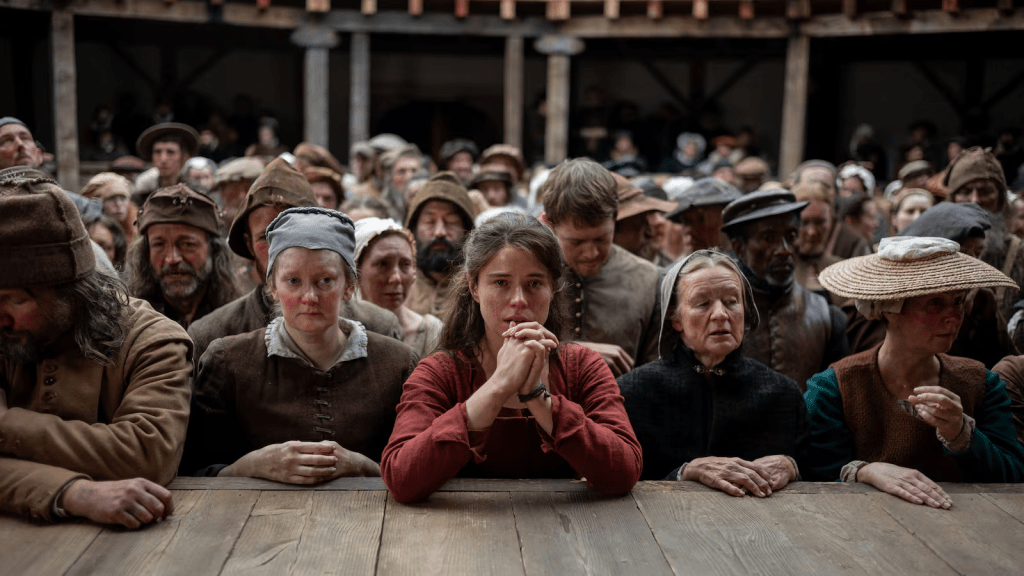
Read more about the Oscar-nominated costumes in Harper’s Bazaar: How Hamnet Turns Elizabethan Costuming On Its Head; if you loved the locations, may we suggest Conde Nast‘s article “Where Was Hamnet Filmed?”, a glorious tour of the locations.

Kim Bryant is a veteran performer, educator, and writer. With 25 years teaching experience, an adjunct professorship in Theatre, and twenty years in the festival world, she brings a wealth of experience to LadyFaire Magazine. She earned her Bachelor’s degree in Education from Lubbock Christian University, a Master’s degree in Theatre from the University of Houston, and a Master’s degree in Communications from Southern New Hampshire University. Kim has studied at Actor’s Studio of Chicago, the Royal Academy of Dramatic Arts in London, and at New York’s Lincoln Center, and currently works in leadership for Disney Live Entertainment.
 ladyfairemagazine.com