

Here cometh April again, and as far as I can see the world hath more fools in it than ever. – Charles Lamb
Today, our usual interaction with the concept of a fool is centered on what my daughter calls the “worst day of the year” – April 1st, when you should be even more suspicious of everything on the internet than usual, and when you have to be on your guard lest a prank mar your day.
While there is some disagreement, most historians trace the idea of an April’s fool to the switch from the Julian calendar to the Gregorian in 1563. Before this switch, the new year began with the spring equinox around April 1st. Those who continued to celebrate the new year around the time were known as April’s fools, and could have paper fish pinned to their back, as they were seen as gullible and easy to catch – poisson d’avril, or April fish.
It may have earlier origins, though. In ancient Rome followers of the cult of Cybele celebrated the festival of Hilaria at the end of March by disguising themselves and mocking others. It has been tied to the vernal equinox as spring weather meant Mother Nature was fooling with them with the changeable temperatures and precipitation of the season. Our modern day understanding of the April Fool’s day gained traction in the 17th century, and has now evolved to an opportunity for businesses’ to work their social media accounts and teachers everywhere to be on high alert should the fateful day fall during a school day.
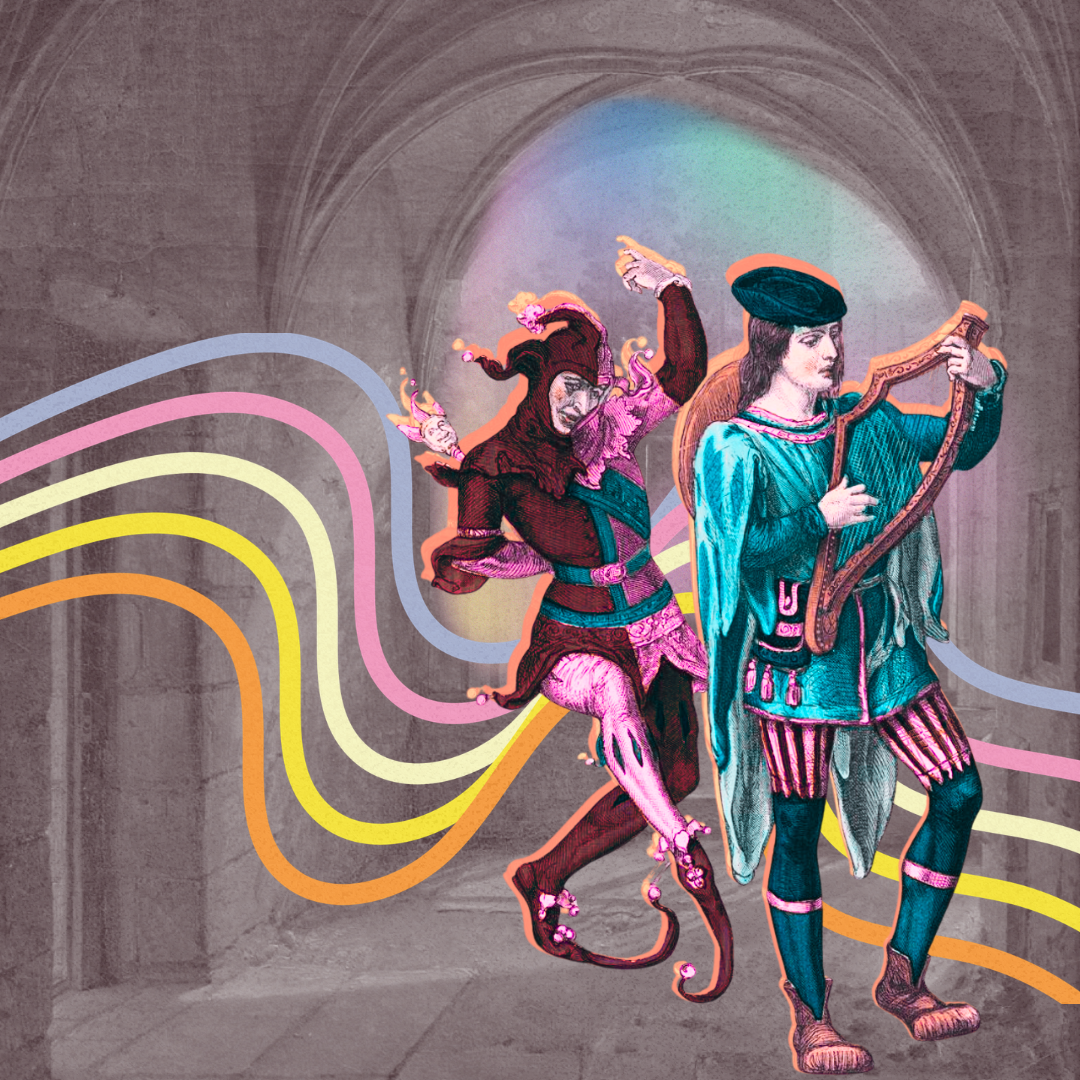
Fools were not always restricted to April 1st, of course. Delving back into history we find a jester, or joculatrix named Adeline who owned land in Hampshire in 1086. While earlier a number of entertainers were known as minstrels, or “little servants”, including those we’d call jesters, it was not until the 12th century we see the term “follus”, or “fool”, in legal documents. England’s King Henry II gave Roland le Pettour, his fool, as long as he came to court every Christmas to “leap, whistle, and fart”. It was not yet a full-time gig, with the majority of their time spent doing more mundane household jobs.
Kings Edward II and III had full-time jesters, all called Robert, while Edward I had Tom le Fol who was given the princely wage of 50 pence to perform at his daughter’s marriage at a time when a skilled workman might command only 2 1/2 pence for a day’s wage. Fools became highly sought after, with those at the pinnacle of their profession working for royalty and achieving super star status with both fortune and property.
It wasn’t all fun and games. They were sometimes used as messengers between opposing sides before battle, and that could result in literally killing the messenger, with the unfortunate fool, or his severed head, being hurled back via trebuchet. If he was not killed for delivering a message, he would have to be the pre-battle entertainment, helping calm nerves by juggling or telling jokes to the assembled army.
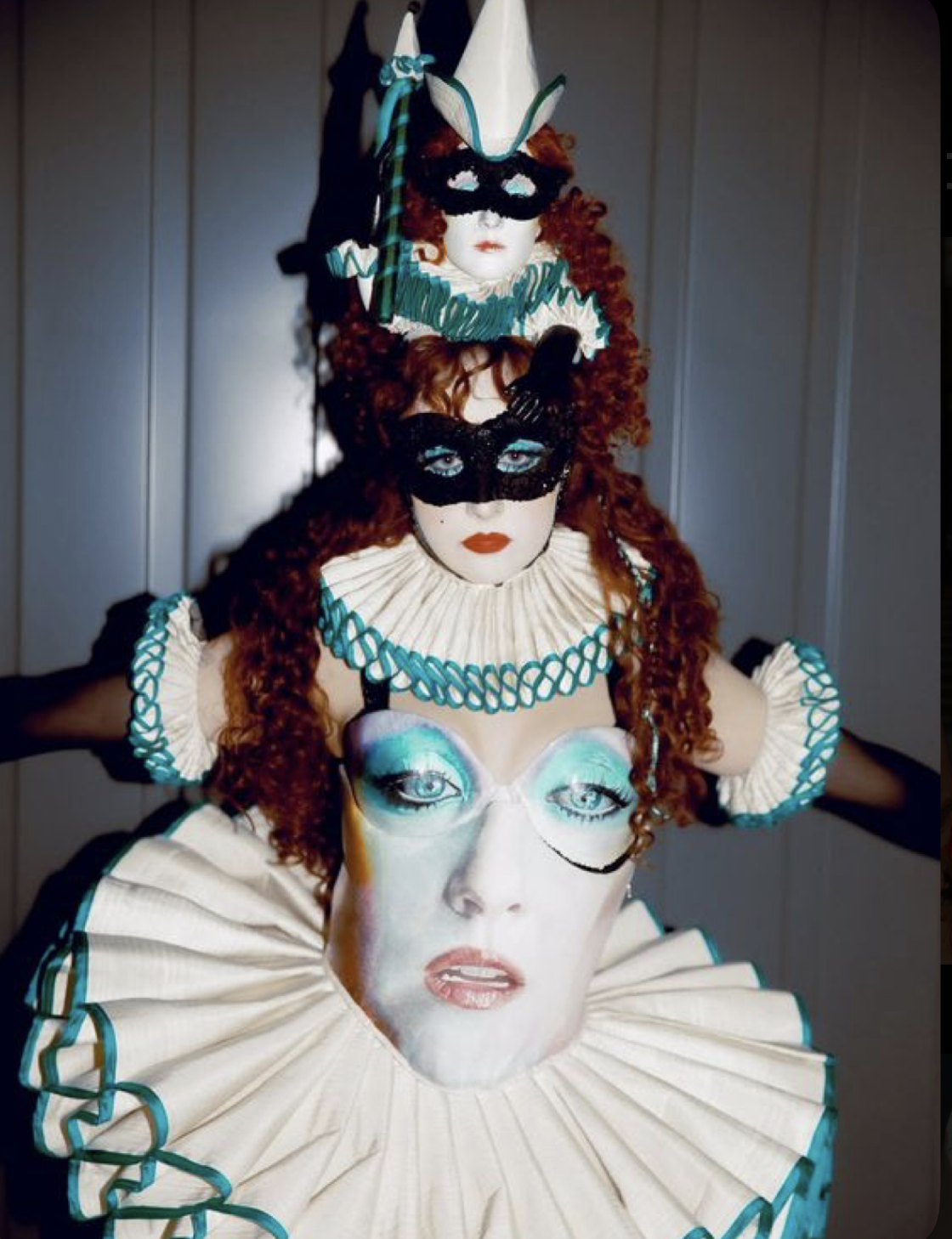
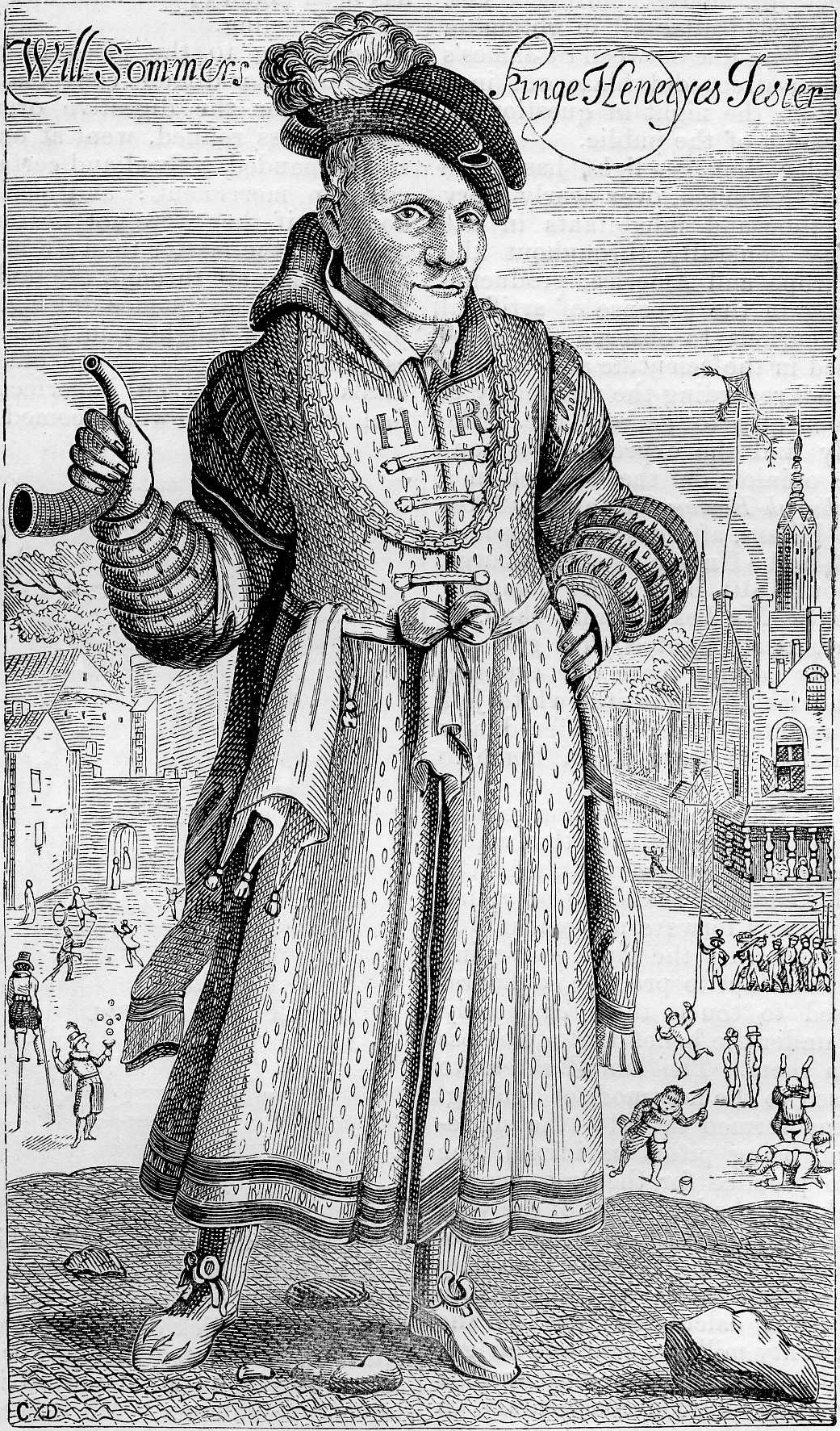
Perhaps the most famous of royal fools was Will Sommers (sometimes spelled Somers), Henry VIII’s jester. Judging from the picture of him in the king’s psalter, he suffered from scoliosis, but it doesn’t seem to have become an issue, as we find him mentioned up to and in the court of Mary I. He was said to be the only person who could make her smile. After performing at the coronation of Elizabeth I, he seems to have retired. He was the only person who could call Henry “uncle” or “Harry”, and was featured in 3 family portraits. He was famous enough to merit his own biography in 1676: . . . this Will Summers was of an easie nature, and tractable disposition, who . . . gained not only grace and favour from his Majesty, but a general love of the Nobility; for he was no carry-tale, nor whisperer, nor flattering insinuater, to breed discord and dissension, but an honest plain down-right, that would speak home without halting, and tell the truth of purpose to shame the Devil; so that his plainness mixt with a kind of facetiousness, and tartness with pleasantness made him very acceptable into the companies of all men. —A Pleasant History of the Life and Death of Will Summers (Author anonymous).
For a peek at some of the jesters and fools who entertain at Renaissance Fests all over the country, click on our feature, “It’s All Fun and Games!”
Interested in learning more? Weird History has you covered!
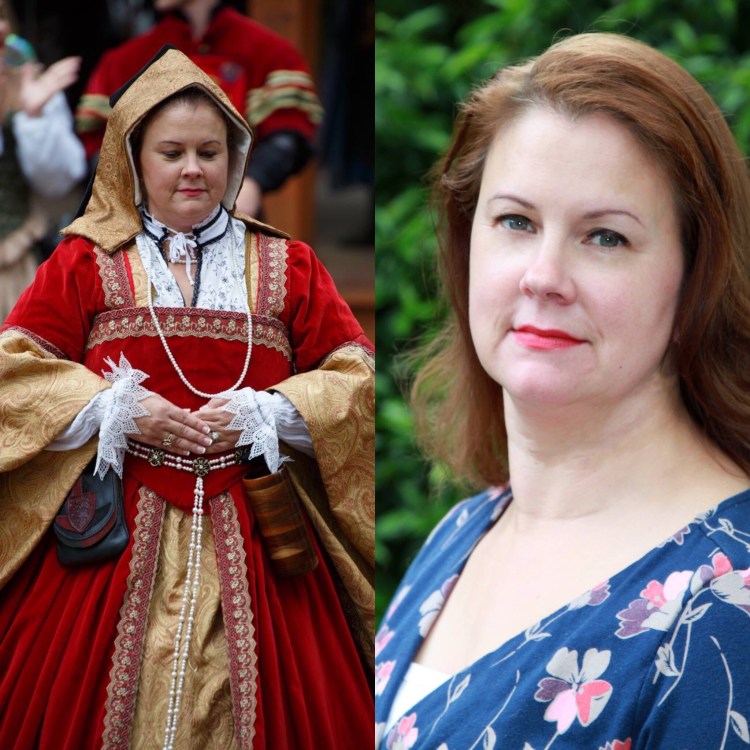
Christine Boyett Barr is an award winning journalist and English instructor, teaching middle school and college English.In addition to her pedagogical pursuits, she hosts movie events for the Alamo Drafthouse Cinema and portrays Catherine of Aragon at the Texas Renaissance Festival. She is the mother of four, and is owned by two cats.
 ladyfairemagazine.com